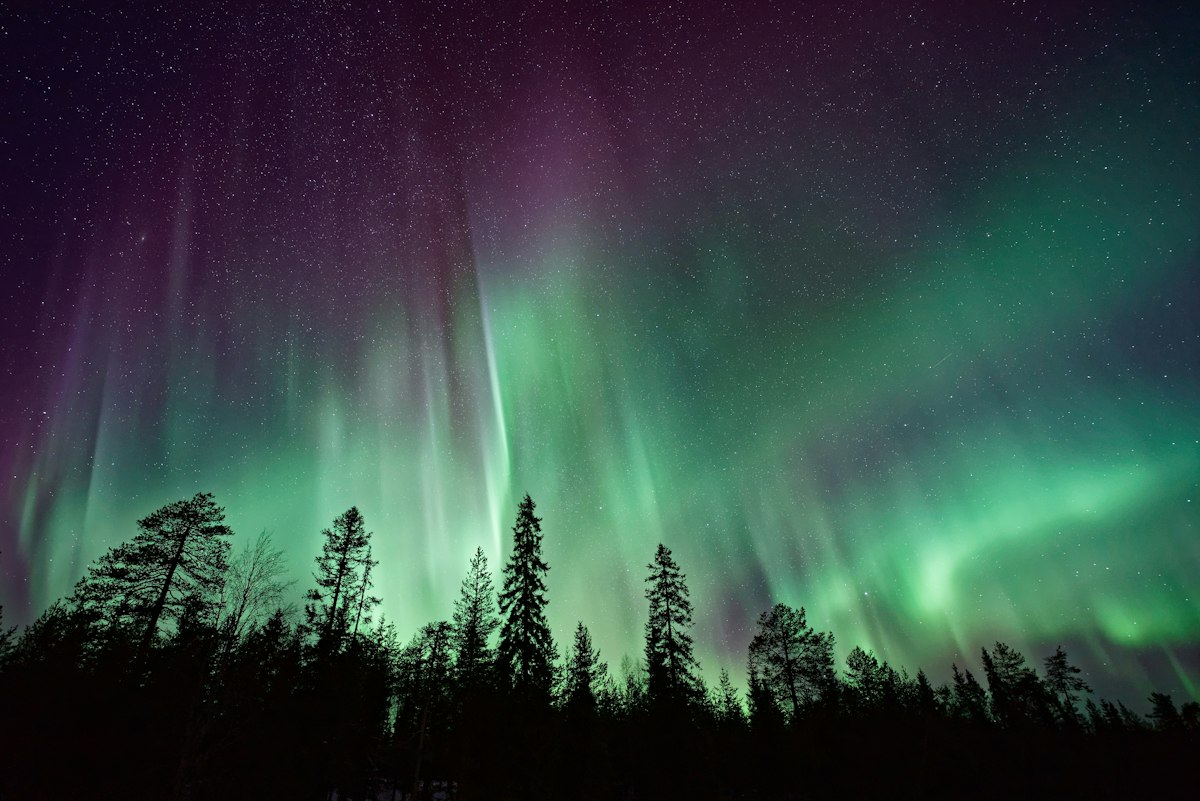
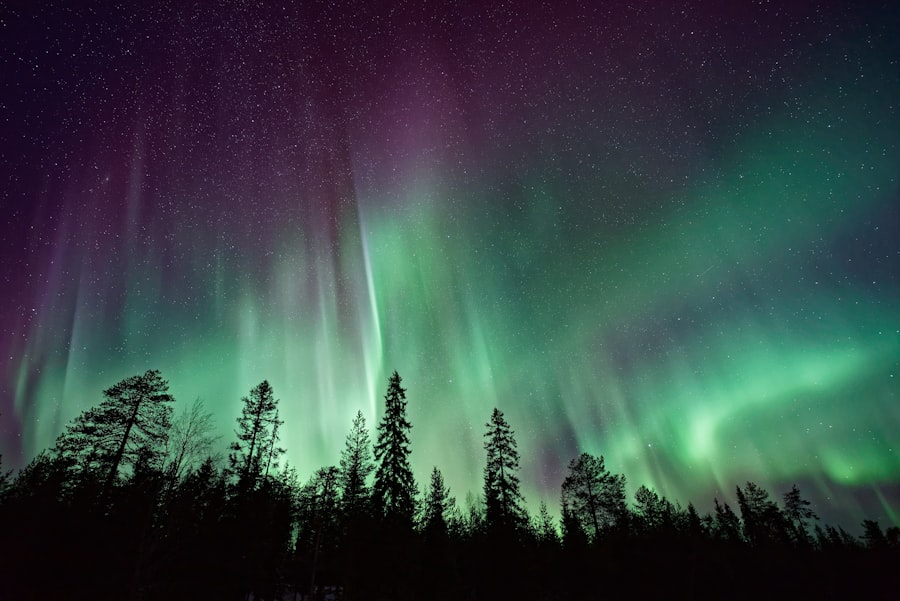
The northern lights are arguably the most spectacular natural phenomenon you will ever witness. Curtains of green, violet, and pink light dancing across the Arctic sky is something no video or photograph can truly capture. It's one of those rare moments where you fall completely silent, gazing upward, unable to believe what you're seeing.
But there's something no one tells you — and it's worth knowing before you plan your journey: more than 50% of the time, the northern lights appear gray to the naked eye. The breathtaking images you see on Instagram owe their vivid colors to long-exposure camera settings that capture what the human eye cannot always distinguish. When solar activity is strong, you can indeed see intense greens and even violets with the naked eye. But in reality, they often appear as a luminous grayish mist drifting silently across the sky. Even so — even in gray — the phenomenon is absolutely extraordinary.
Where to See the Northern Lights
Norway — Tromsø and Alta. Our favorite destination for the northern lights. Tromsø is considered the world capital of the aurora borealis — it boasts the finest tourist infrastructure, luxury hotels, outstanding restaurants, and a wide range of nocturnal excursions designed to maximize your chances of a sighting. Alta is home to the world's first aurora observatory and enjoys a privileged location with fewer clouds than other parts of northern Norway.
Iceland. The appeal of Iceland lies in the remarkable combination of northern lights with volcanic landscapes found nowhere else on earth. Geysers, dramatic waterfalls, natural hot springs, black sand beaches, and the legendary Blue Lagoon. The Golden Circle by day paired with aurora hunting by night is an extraordinary pairing. The one drawback: Iceland's weather is notoriously unpredictable, and cloud cover can frustrate even the most patient traveler for days on end.
Finland (Lapland). For many travelers, this is the most magical experience of all. Glass igloos where you fall asleep staring directly at the sky — if the aurora appears in the early hours of the morning, you witness it from the warmth of your own bed. Husky sled safaris beneath the Arctic sky, snowmobile rides through snow-laden forests, and — for those traveling in December — a visit to Santa Claus himself in Rovaniemi. Finland delivers northern lights alongside a complete Arctic experience.
Sweden (Abisko). Regarded as one of the finest aurora-viewing locations on the planet, thanks to its unique microclimate. Abisko is sheltered by mountains that block Atlantic cloud systems, resulting in clearer skies more consistently than almost any other Arctic destination. It is less traveled than Tromsø or Iceland, lending it a distinctly exclusive character.
Canada — Whitehorse (Yukon) and Yellowknife. Statistically among the best places in the world to witness the aurora borealis. Yellowknife offers more than 240 nights of potential sightings per year. Temperatures are extreme (–20 to –30°C), but skies tend to be beautifully clear. An ideal choice for travelers who wish to pair the northern lights with the raw, untamed beauty of Canada's north.
Alaska — Fairbanks. The most accessible option for travelers from the United States. Fairbanks sits directly beneath the auroral oval and offers excellent viewing odds. It pairs easily with a trip to Anchorage, or even an Alaskan cruise in summer — though for aurora viewing, a winter visit is essential.
When to Go
Aurora season runs from September through March. Darkness is a prerequisite — and during the Arctic summer, the sun shines for 24 hours (the famous midnight sun), making sightings physically impossible from May through August.
September–October: milder temperatures, autumn foliage, solid solar activity. An excellent choice for travelers who prefer to avoid extreme cold.
November–January: maximum darkness (in some areas the sun doesn't rise for weeks at a time), the longest windows for potential sightings. Intensely cold.
February–March: the days begin to lengthen; temperatures remain cold but grow more manageable. March is particularly popular because it balances strong aurora probability with longer daylight hours for daytime activities.
The Four Factors You Need
Witnessing the northern lights requires four conditions aligned simultaneously:
1. The right time of year (September to March). Without darkness, there are no visible auroras.
2. No light pollution. You must be well away from major cities. Nighttime excursions take you to carefully selected dark-sky locations.
3. Solar activity. The aurora borealis is caused by solar particles colliding with Earth's atmosphere. Solar activity fluctuates — KP index readings forecast the intensity. Your guide monitors this in real time.
4. Clear skies. Cloud cover renders the aurora invisible. This is the most unpredictable factor of all, and the primary reason Abisko, Sweden holds such a distinct advantage with its protected microclimate.
The Truth No One Tells You
There are no guarantees. You might spend ten nights without a single sighting — or witness the aurora every night for five days in a row. Nature operates on no schedule and answers to no agenda. What we can do is maximize your odds: selecting the destination with the strongest statistical likelihood, crafting an itinerary with multiple nights of opportunity, and partnering with local guides who know the best vantage points and monitor conditions in real time.
The colors aren't always what you see in photographs. Those vivid greens and violets are real — but a camera set to long exposure captures what the naked eye doesn't always register. To the unaided eye, the aurora often appears as a pale green or grayish luminous mist moving gracefully across the sky. When solar activity is strong, you'll see the brilliant colors in full. Go prepared for both possibilities — each is spectacular in its own right.
The cold is very real. Norway in winter: –5 to –10°C. Finland: –10 to –20°C. Canada and Alaska: as low as –30°C. Professional thermal gear is not optional — the winter coat in your closet will not suffice. Many excursions provide complete thermal suits.
Experiences We Design
Private aurora hunting with a dedicated guide. A local expert takes you by private vehicle to the finest viewing locations, monitoring conditions in real time throughout the night. Hot drinks are included, and excursions typically run four to six hours.
A night in a glass igloo. In Finland, you sleep beneath a crystal ceiling. Should the aurora appear in the early morning hours, you witness it without leaving the warmth of your bed.
Husky sled safari. Gliding through snow-covered forests pulled by a team of huskies beneath the Arctic sky — one of the most enchanting experiences the journey has to offer.
Snowmobile rides across the tundra. Pure adrenaline set against an Arctic panorama. Many excursions conclude at a remote cabin with dinner by the fire.
Norwegian fjord cruise. Watching the northern lights from a vessel navigating the fjords is an entirely different experience — the reflection shimmering on the water doubles the spectacle.
Recommended Combinations
Norway + Iceland. Aurora hunting in Tromsø paired with Iceland's volcanic landscapes. Two profoundly different experiences woven into a single journey.
Finland + Stockholm. The raw magic of Arctic Lapland followed by the refined elegance of Sweden's capital.
Canada + Vancouver. Aurora sightings in Yellowknife or Whitehorse combined with one of Canada's most beautiful cities on the Pacific coast.
"Seeing the northern lights was a moment that changed us — you stand there in complete silence, watching something that doesn't seem real."
Frequently Asked Questions About the Northern Lights
Can I see the northern lights in summer?
No. Darkness is essential — sightings are only possible from September through March. During the Arctic summer, the sun shines around the clock.
How cold does it get?
Norway: –5 to –10°C. Finland: –10 to –20°C. Canada and Alaska: as low as –30°C. Professional thermal clothing is essential — standard winter wear is not enough.
Can I combine aurora viewing with another destination?
Absolutely. Norway + Iceland, Finland + Stockholm, and Canada + Vancouver are popular combinations we design on a regular basis.
| Destination | Best Season | Likelihood | Temperature | Destination Highlights |
|---|---|---|---|---|
| Tromsø, Norway | Oct – Mar | High | –5 to –10°C | Best infrastructure, fjords |
| Alta, Norway | Oct – Mar | High | –5 to –15°C | World's first aurora observatory |
| Iceland | Sep – Mar | Medium-High | 0 to –10°C | Geysers, volcanoes, hot springs |
| Lapland, Finland | Sep – Mar | Medium-High | –10 to –20°C | Glass igloos, huskies, Santa Claus |
| Abisko, Sweden | Oct – Mar | Very High | –10 to –15°C | Microclimate: consistently clearer skies |
| Yellowknife, Canada | Sep – Mar | Very High | –20 to –30°C | 240+ potential viewing nights per year |
| Whitehorse, Canada | Sep – Mar | High | –15 to –25°C | Wild Yukon backcountry |
| Fairbanks, Alaska | Sep – Mar | High | –15 to –30°C | Most accessible from the USA |
Ready to live this experience?
Our team of Travel Designers will contact you within 24 hours.